Best time to visit Maasai Mara

The honest answer is there isn’t a bad time to visit the Maasai Mara. Kenya’s most famous reserve has resident wildlife year-round, so the real question isn’t “when is it good” but “what do you want to see, and how much company are you okay sharing it with?”

If you want the river crossings

The Great Migration’s river crossings of wildebeest and zebra crossing the Mara River, with waiting crocodiles, happen roughly between July and October, though exact timing shifts year to year based on rainfall patterns further south in the Serengeti. This is peak season: expect higher prices, fuller camps, and more vehicles at popular crossing points.

If a river crossing is your main goal, book both flights and camp at least 4–6 months ahead—the best-located camps near the Mara River sell out early for July–September.

If you want fewer crowds and lower prices

The shoulder months are April/May and November; see fewer visitors and noticeably lower rates, though the long rains in April/May can make some roads difficult and a few camps close temporarily. December through March offers a good middle ground: drier weather, resident wildlife, and prices below peak season.
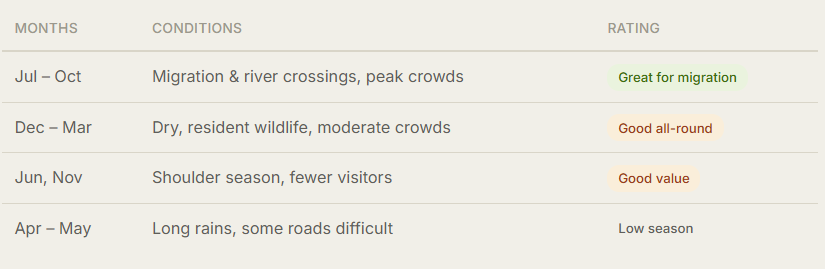
Month-by-month overview
Our take

If seeing a river crossing is the whole point of your trip, plan around August–September and book early. If you mainly want strong game viewing without peak-season prices and crowds, December through March is a genuinely underrated window.

Plan this tripe

KSh 12,500

Stays from, per night

View Maasai Mara guide

Related guides

Nairobi to Maasai Mara: how to get there


Budget safari in Kenya: what it actually costs


What to pack for a Kenya safari